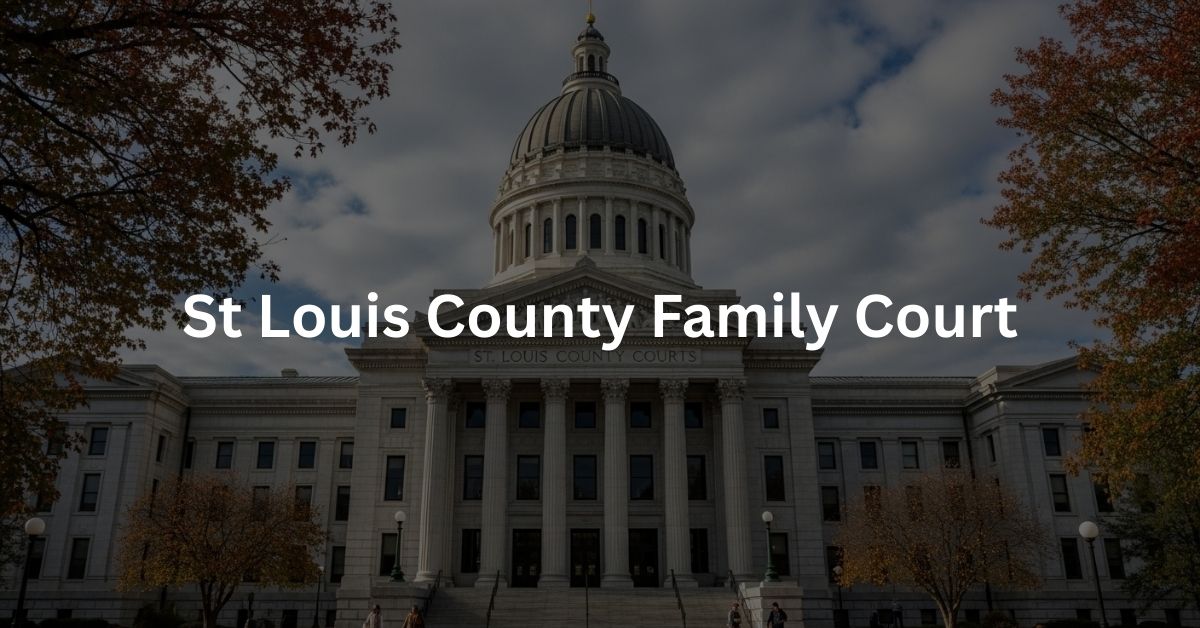
St Louis County Family Court handles divorce, child custody, child support, spousal support, and other domestic cases filed within the county. It operates under the 21st Judicial Circuit and manages family law matters through a dedicated judicial division that focuses exclusively on domestic relations court proceedings, including parenting disputes and protection orders. The St. Louis County Family Court serves parents, spouses, and guardians who need legal orders for marriage dissolution, parenting time, financial support, or protection from abuse.
As part of the 21st Judicial Circuit Court of Missouri, this domestic relations court applies Missouri family law in each case and issues enforceable rulings. It handles a wide range of domestic matters, including divorce, legal separation, paternity, adoption, child custody disputes, and orders of protection. Case files and related documents are maintained through the Missouri Judiciary online system, making a St Louis record search an important step for individuals seeking access to family court information. Through a St Louis record search, users can review docket entries, confirm filing status, and locate publicly available case details, while understanding that certain sensitive records may remain confidential under Missouri law.
What the St Louis County Family Court Handles
The st louis county family court manages a broad range of domestic cases. Judges in this judicial division hear matters that affect spouses, parents, and children.
Common case types include:
- Divorce (Dissolution of Marriage)
- Legal Separation
- Child Custody and Visitation
- Child Support Orders
- Paternity Actions
- Orders of Protection (Restraining Orders)
- Adoption Proceedings
- Guardianship of Minors
- Modification of Existing Court Orders
Each case follows Missouri family law statutes and local court rules. Court staff process filings through the Missouri Case.net system, and hearings take place before an assigned judge in the domestic relations court division.
Structure Within the 21st Judicial Circuit
The family court operates as a specialized judicial division inside the 21st Judicial Circuit. This structure allows judges to focus only on domestic relations cases rather than criminal or civil litigation.
Key features of this division include:
| Feature | Description |
|---|---|
| Assigned Family Court Judges | Judges handle only domestic relations matters |
| Family Court Services Unit | Provides mediation and evaluations |
| Parent Education Programs | Required in many custody disputes |
| Court-Appointed Guardians ad Litem | Represent the child’s best interests |
This focused system helps move domestic cases forward in a consistent and organized manner. Parents often participate in mediation before a full hearing. The court may order parenting plans, supervised visitation, or financial reviews when needed.
Types of Domestic Relations Cases Filed
Domestic relations filings form a large portion of the circuit’s caseload each year. Most involve divorce and child custody disputes. Others involve enforcement of child support or modifications after life changes such as relocation or job loss.
The court reviews:
- Initial divorce petitions
- Motions to modify custody or support
- Contempt actions for unpaid support
- Emergency protection orders
Every filing begins with a petition submitted to the clerk of the court. After service of process, the case proceeds through scheduled hearings, mediation sessions, or settlement conferences. The st louis county family court plays a central role in resolving family disputes fairly and efficiently within the structured domestic relations court system.
How to Search St Louis County Family Court Services
Residents can complete a family court case lookup through the county’s public access system to review filings, hearing dates, and case status updates. The st louis county family court case search process allows users to check family court case status, review docket entries, and request official records when needed.
Family court cases in St. Louis County are managed under the 21st Judicial Circuit Court of Missouri. The official court website is available at https://www.stlouiscountymo.gov/st-louis-county-government/courts. Online case searches are conducted through Missouri’s statewide portal, https://www.courts.mo.gov/casenet operated by the Missouri Judiciary.
Search Family Court Cases Online
The fastest way to complete a family court case lookup is through the Missouri Case.net online portal, which connects to the state’s public access system. This judicial records database allows users to search active and closed domestic relations cases.
Users can search in two primary ways:
Case Number Search
Enter the full case number into the search field. This method delivers the most accurate result and pulls up the full court docket, case summary, and recent filings.
Search by Party Name
Enter the first and last name of one party involved in the case. The system may display multiple results if names are common.
Search results usually include:
- Case number
- Filing date
- Case type
- Assigned division
- Case status (open, closed, pending)
- Upcoming hearing date
- Basic docket entries
The case summary shows recent activity, including motions filed or scheduled hearings. Users can check family court case status directly from this listing. Some cases remain restricted. Sealed juvenile matters, adoption files, and certain confidential domestic cases do not appear in the public access system. The electronic filing system protects private records in compliance with Missouri law.
Searching by Case Type
The portal allows filtering by case category within the family division. Users searching for a specific domestic relations case can narrow results by selecting the appropriate type.
Common categories include:
- Dissolution of marriage (divorce cases)
- Custody cases, including custody modification filings
- Child support hearings
- Guardianship filing matters
- Paternity actions
Selecting the correct case type improves search accuracy. For example, someone reviewing a divorce should select dissolution of marriage under the family division filter. This filtering tool supports quicker results and reduces confusion in large judicial databases.
Requesting Copies of Family Court Records
Viewing case information online differs from requesting official documents. The public portal displays summaries and docket listings, yet it does not provide certified legal copies. To obtain a certified copy, a person must submit a formal court records request to the filing office. Requests go through the clerk of court, who serves as the official record custodian.
Common document requests include:
- Divorce decree copies
- Parenting plan documentation
- Judgments and final orders
- Guardianship appointment papers
Certified copies carry a court seal and serve as an official copy for legal purposes. Fees may apply for document retrieval and certification services.
Checking Hearing Dates & Court Calendar
Users can confirm a court appearance date through the docket listing in the online system. Each entry shows the scheduled hearing, time, and courtroom assignment. The court calendar provides a broader view of upcoming sessions within the family division. By reviewing the docket listing, users can verify their scheduled hearing and confirm the assigned courtroom before arrival.
Structure of the Family Court in St. Louis County
The Family Court in St. Louis County operates within the county’s Circuit Court system and serves as the primary trial court for domestic matters. While the St. Louis County Municipal Court handles city ordinance violations and local code matters, the Family Court functions as a specialized judicial division dedicated to resolving domestic disputes under Missouri law.This structured system allows the Family Court to manage divorce, custody, and support cases in an organized and consistent manner, separate from the responsibilities of Municipal Court. By working within the broader circuit framework, the family court applies Missouri family law standards across all domestic relations cases filed in the county, ensuring uniform procedures and enforceable judgments.
The family court is part of the 21st Judicial Circuit Court of Missouri, which serves St. Louis County. As a trial court, this circuit court hears cases at the local level, including civil, criminal, probate, and family matters. The family court exists as a dedicated circuit court division, allowing judges to concentrate fully on cases involving marriage, children, and household disputes.
Circuit Court Structure
Missouri’s judicial system organizes trial-level cases through circuit courts. In St. Louis County, the Circuit Court includes multiple divisions, each assigned to a specific case type.
The family court division handles:
- Divorce and legal separation
- Child custody and visitation
- Child support enforcement
- Paternity cases
- Protection orders
- Adoption proceedings
This structure allows the court to process domestic cases efficiently. It promotes consistency in rulings under Missouri family law, since judges in this division deal with similar legal issues on a regular basis.
Judicial Divisions and Assigned Judges
The family court operates through several courtrooms within its judicial division. Each courtroom is overseen by assigned family court judges. These judges review pleadings, conduct hearings, and issue final judgments.
Family court judges may:
- Approve parenting plans
- Set temporary support orders
- Appoint guardians ad litem
- Order mediation
- Modify existing custody arrangements
Their focus remains on protecting the best interests of children and applying Missouri family law fairly. Cases are usually assigned randomly to a division, and parties remain in that division until the case concludes.
Administrative Oversight and Court Administration
Court administration manages scheduling, filings, and courtroom operations. The court administration office supports judges and maintains official records. It oversees case management systems, coordinates clerk services, and enforces local court rules.
Administrative oversight includes supervision by the Presiding Judge of the 21st Judicial Circuit. This leadership maintains consistent procedures across divisions and monitors compliance with state judicial standards.
Types of Cases Handled by the Family Court
The Family Court in St. Louis County Record handles a wide range of domestic matters involving marriage, children, and parental rights. As part of the 21st Judicial Circuit Court of Missouri, this division applies Missouri statutes to resolve disputes through structured hearings and enforceable court orders. Below are the primary case categories handled within the family division.
Divorce & Dissolution of Marriage
A dissolution of marriage legally ends a marriage and resolves financial and parenting matters. The process begins by filing a petition with the circuit court clerk, which formally opens the case.
During a divorce proceeding, the court addresses:
- Division of marital property
- Allocation of debts
- Child custody arrangements
- Child support obligations
- Spousal maintenance
Some couples request legal separation instead of divorce. This allows spouses to live apart while remaining legally married.
Many cases conclude with a written settlement agreement. This document outlines property division, custody terms, and financial support. If both parties agree, the judge reviews and approves the agreement. If disputes remain, the court conducts a trial and issues a final judgment.
Child Custody Cases
Child custody cases focus on protecting the child’s best interests. Judges evaluate parental involvement, home stability, and the child’s overall welfare before issuing an order.
The court determines two main types of custody:
- Physical custody – where the child lives
- Legal custody – who makes decisions about education, health care, and welfare
Parents may later file for a custody modification if major life changes occur. Common reasons include relocation, work schedule changes, or safety concerns. In urgent situations, a parent may request an emergency custody order. The judge may grant temporary custody if immediate risk exists, followed by a full hearing.
Child Support Hearings
The court schedules child support hearings to establish, review, or modify payment obligations. Judges review both parents’ financial disclosures before setting an amount. Support calculations rely on the Missouri child support calculator, developed under standards set by the Missouri Department of Social Services.
During these hearings, the court examines:
- Income statements
- Employment records
- Health insurance costs
- Childcare expenses
- Existing custody arrangements
If a parent fails to pay, the court may begin child support enforcement actions such as wage withholding or legal penalties.
Guardianship & Paternity Cases
The family division also handles guardianship and parentage matters. These cases protect minors and clarify parental responsibilities.
A guardianship case may be filed when:
- A parent is unable to provide care
- A child lacks stable supervision
- A relative seeks legal authority
In many cases, the court appoints a guardian ad litem to represent the child’s interests. A paternity case establishes the legal father of a child. The court may order genetic testing to confirm parentage. Once established, the judge can issue custody and support orders connected to the paternity determination.
Parenting Plans & Visitation Rights
Parenting plans and visitation rights define how parents share responsibilities after separation or divorce. The Family Court in St. Louis County requires clear written terms so both parents understand custody arrangements and parenting time expectations. Courts within the 21st Judicial Circuit Court of Missouri review each parenting plan to confirm it serves the child’s best interests. Judges expect detailed schedules, decision-making terms, and communication rules before approving any order.
What a Parenting Plan Must Include
A parenting plan is a legally binding document filed in a domestic relations case. It outlines how parents will raise their child after separation.
A complete parenting plan usually covers:
- A weekly parenting time schedule
- Holiday and vacation arrangements
- Transportation responsibilities
- Decision-making authority (education, healthcare, religion)
- Communication rules between parents
- Procedures for resolving future disputes
The court reviews these details carefully. If parents agree on terms, the judge may approve the plan without trial. If disagreements exist, the court can order revisions or conduct a hearing.
Visitation Rights and Parenting Time
When one parent has primary physical custody, the other parent receives visitation rights, often referred to as parenting time. Missouri courts encourage meaningful contact with both parents whenever safe and appropriate.
Parenting time schedules may include:
- Alternating weekends
- Midweek visits
- Extended summer periods
- Shared holidays
Judges focus on stability and consistency. They consider the child’s school schedule, age, and existing routine before finalizing a parenting time schedule.
Supervised and Grandparent Visitation
In some cases, the court orders supervised visitation. This occurs when safety concerns exist, such as past domestic conflict or substance abuse. Visits take place in the presence of a neutral third party or at a court-approved facility. Missouri law also allows for grandparent visitation under limited circumstances. Grandparents may petition the court if visitation supports the child’s welfare and does not interfere with parental rights. The judge weighs family history, the child’s needs, and the parent’s preferences before issuing an order.
Mediation in Parenting Disputes
The court often requires mediation before scheduling a contested custody trial. Mediation allows parents to meet with a neutral mediator and work toward a parenting agreement.
Mediation can:
- Reduce court time
- Lower conflict
- Promote cooperative co-parenting
- Lead to faster resolution
If mediation succeeds, the agreed parenting plan is submitted to the judge for approval. If it fails, the case proceeds to a formal hearing where the court issues a final order.
Filing a Case in St Louis County Family Court
Filing a case in St Louis County Family Court begins with submitting the correct paperwork to open a formal legal action. Once the filing petition is accepted, the court assigns a case number and sets the process in motion under Missouri family law. All family cases are filed within the 21st Judicial Circuit Court of Missouri, which serves St. Louis County. The procedure follows structured steps that apply to divorce, custody, child support, guardianship, and paternity matters.
Filing the Petition
The process starts with filing a petition at the family court filing office. The petition explains what the person is requesting from the court, such as dissolution of marriage, custody orders, or support payments.
Each case type requires specific family court forms, which may include:
- Petition for Dissolution of Marriage
- Motion for Custody or Custody Modification
- Petition for Child Support
- Guardianship application
- Paternity petition
The clerk reviews the paperwork for completeness before accepting it. Once approved, the court officially opens the case.
Paying Court Filing Fees
After submitting the petition, the party must pay court filing fees. The fee amount depends on the type of case being filed. If a person cannot afford the fee, they may submit an application to proceed as an indigent party. The judge reviews the financial information and decides whether to waive the fee. Payment confirmation finalizes the filing and allows the case to move forward.
Case Number Assignment
Once the petition is accepted and fees are processed, the court issues a unique case number assignment. This number identifies the case in the court’s system and appears on all future documents.
The case number is required for:
- Scheduling hearings
- Filing motions
- Checking case progress
- Conducting a family court case lookup
Parties should keep this number for all court communications.
Service of Process
After filing, the other party must receive official notice through service of process. Service ensures that the responding party has legal notice and an opportunity to respond.
Service can occur through:
- Sheriff’s department delivery
- Private process server
- Certified mail (in certain cases)
The court requires proof of service before scheduling major hearings. Without proper service, the case cannot proceed.
Tracking Your Case
Once service is complete, parties can monitor updates through the Missouri Case.net system. A family court case lookup allows users to review docket entries, court dates, and filings using the assigned case number. By following these procedural steps filing the petition, paying fees, completing service, and tracking the assigned case number parties can move their family court case forward in an organized and legally compliant manner.
Court Hearings, Dockets & Calendar
Court hearings in St Louis County Family Court follow a structured process where a judge reviews filings, hears arguments, and issues orders. Each court appearance is recorded in the official case docket, which tracks every action taken in the case.
Family court matters are handled within the 21st Judicial Circuit Court of Missouri, serving St. Louis County. The court schedules hearings based on case type, urgency, and judicial division availability.
Court Hearing Process
After a case is filed and properly served, the court may schedule:
- Case management conferences
- Motion hearings
- Temporary order hearings
- Settlement conferences
- Final trial hearings
During the hearing, the judge reviews evidence, listens to both parties, and may ask questions. Some hearings last only a few minutes, while trials can take several hours or days depending on the dispute. Parties must arrive on time and bring all required documents. Missing a scheduled court appearance can lead to delays or court orders issued without that party present.
The Case Docket
The case docket serves as the official record of activity in a case. It lists:
- Filing dates
- Motions submitted
- Orders entered
- Scheduled hearings
- Case status updates
Each entry appears in chronological order. The docket helps parties track progress and prepare for upcoming court dates.
Mediation & Alternative Dispute Resolution
The Family Court in St. Louis County actively promotes mediation and other forms of dispute resolution before moving a case to trial. Judges recognize that many family conflicts, especially those involving children, can be resolved more effectively outside a courtroom setting. For that reason, parties are often directed to participate in structured resolution programs early in the case.
Within the 21st Judicial Circuit Court of Missouri, courts frequently require court ordered mediation in custody and parenting disputes. This process gives both parties a formal opportunity to negotiate terms with the help of a neutral third party. Mediation sessions focus on practical solutions and long-term stability rather than courtroom arguments.
Court Ordered Mediation
In many custody or parenting cases, the judge issues an order requiring mediation before a contested hearing can proceed. A trained mediator meets with both parties and guides discussions around parenting time, communication rules, and decision-making responsibilities.
Mediation often focuses on:
- Developing realistic parenting schedules
- Addressing school and healthcare decisions
- Reducing parental conflict
- Reaching a written settlement agreement
If mediation leads to agreement, the terms are drafted into a settlement agreement and submitted to the court for review. Once approved, the agreement becomes legally binding.
Role of a Parenting Coordinator
In high-conflict cases, the court may appoint a parenting coordinator to assist after a custody order is entered. This professional works with parents to manage ongoing disputes and improve communication.
A parenting coordinator may help resolve:
- Scheduling conflicts
- Minor interpretation issues in court orders
- Day-to-day parenting disagreements
This structured form of dispute resolution reduces repeated court filings and supports compliance with existing orders. By promoting mediation and coordinated solutions, the family division helps families reach stable outcomes with less courtroom involvement.
Modifying or Enforcing a Family Court Order
Family court orders are legally binding and carry the authority of the court once signed by a judge. These orders may address custody, visitation, child support, or other family law matters. Over time, life circumstances can change, or one party may fail to follow the terms of the order. In such situations, the Family Court in St. Louis County provides formal procedures to request changes or enforce compliance.
Requests to change or enforce orders are handled within the 21st Judicial Circuit Court of Missouri under established Missouri family law standards. A party seeking a change must file a motion to modify, while someone seeking compliance may initiate an enforcement action. The court reviews each request carefully and schedules a hearing if necessary. Judges require clear evidence before altering an existing judgment or imposing penalties for violations.
Filing a Motion to Modify
A parent may request a custody modification or support adjustment if a substantial and continuing change has occurred since the original order. Courts evaluate whether the change affects the child’s welfare or significantly impacts financial ability.
Common reasons to file a motion to modify include:
- Relocation of a parent
- Change in employment or income
- Safety concerns involving the child
- Long-term changes in parenting schedules
The process begins by filing a written motion and serving the other party. After service, the court schedules a hearing where both sides present evidence. The judge then determines whether modification is justified.
Enforcing an Existing Order
When a party fails to follow a court order, the other party may request child support enforcement or another form of enforcement action. The court expects full compliance with custody, visitation, and support terms.
Enforcement may involve:
- Wage withholding for unpaid support
- License suspension referrals
- Payment review hearings
- Filing for contempt of court
If the court finds a party in contempt of court, the judge may impose fines, structured payment plans, or other corrective measures. These enforcement procedures help maintain stability and protect the integrity of court-issued family orders.
Modifying or Enforcing a Family Court Order
Family court orders are legally binding and carry the authority of the court once signed by a judge. These orders may address custody, visitation, child support, or other family law matters. Over time, life circumstances can change, or one party may fail to follow the terms of the order. In such situations, the Family Court in St. Louis County provides formal procedures to request changes or enforce compliance.
Requests to change or enforce orders are handled within the 21st Judicial Circuit Court of Missouri under established Missouri family law standards. A party seeking a change must file a motion to modify, while someone seeking compliance may initiate an enforcement action. The court reviews each request carefully and schedules a hearing if necessary. Judges require clear evidence before altering an existing judgment or imposing penalties for violations.
Filing a Motion to Modify
A parent may request a custody modification or support adjustment if a substantial and continuing change has occurred since the original order. Courts evaluate whether the change affects the child’s welfare or significantly impacts financial ability.
Common reasons to file a motion to modify include:
- Relocation of a parent
- Change in employment or income
- Safety concerns involving the child
- Long-term changes in parenting schedules
The process begins by filing a written motion and serving the other party. After service, the court schedules a hearing where both sides present evidence. The judge then determines whether modification is justified.
Enforcing an Existing Order
When a party fails to follow a court order, the other party may request child support enforcement or another form of enforcement action. The court expects full compliance with custody, visitation, and support terms.
Enforcement may involve:
- Wage withholding for unpaid support
- License suspension referrals
- Payment review hearings
- Filing for contempt of court
If the court finds a party in contempt of court, the judge may impose fines, structured payment plans, or other corrective measures. These enforcement procedures help maintain stability and protect the integrity of court-issued family orders.
Accessing Family Court Records
Family court records in St. Louis County are available through online search tools and in-person requests, depending on the type of document needed. A family court case lookup allows users to review basic case details, docket entries, and hearing dates through Missouri’s public court system.
Most family-related court records are maintained by the 21st Judicial Circuit Court of Missouri. Users can search by case number or party name using the state’s public portal. The online system displays case summaries, filing dates, assigned divisions, and case status updates.
Viewing Records Online
A family court case lookup provides general case information, including:
- Case number
- Party names
- Filing date
- Case status
- Scheduled hearings
These records are part of the public system, yet certain public access limitations apply. Sealed juvenile cases, adoption files, and confidential domestic matters do not appear in public search results.
Requesting Certified Copies
Viewing case information online differs from obtaining official documents. To receive certified copies, a person must submit a formal request to the court clerk’s office.
Common document requests include:
- Final judgment orders
- Parenting plans
- A certified divorce decree
Certified copies carry the court seal and serve as official proof for legal or government use. Fees may apply depending on the number of pages and certification requirements. For detailed instructions on submitting a request, required forms, and processing times, refer to the dedicated Court Records page on this website.
Frequently Asked Questions
Below are common questions about family court procedures in St. Louis County. These answers provide general procedural information for cases handled by the 21st Judicial Circuit Court of Missouri.
How long does a custody case take?
The length of a custody case depends on the level of conflict and court scheduling. An uncontested case may resolve in a few months. A contested case involving evaluations, mediation, or multiple hearings can take six months or longer. Court availability, service of process, and compliance with required programs can affect the timeline.
How to modify child support?
To modify child support, a party must file a motion to modify with the family court. The court reviews whether a substantial and continuing change in income or custody has occurred. The judge may examine updated pay stubs, tax returns, and expenses before issuing a revised order. A hearing is usually required before any change becomes effective.
How to get emergency custody?
A parent may request emergency custody by filing a motion that explains immediate safety concerns. The court reviews the allegations and may issue a temporary order if risk to the child is demonstrated. A full hearing typically follows, allowing both parents to present evidence before the judge makes a final decision.
Where is the family court located?
Family court matters in St. Louis County are handled at the St. Louis County Circuit Court. Courtrooms and filing offices operate within the county courthouse system. Current addresses and division details are available on the official court website.
How to file without an attorney?
A person may file a family court case without an attorney by submitting the required forms directly to the clerk’s office. The filer must complete the correct petition, pay filing fees, and arrange service of process. Self-represented parties are responsible for meeting court deadlines and procedural requirements.